How to Build a Winning JEE Main 2026 Preparation Strategy for Your Coaching Institute
The Joint Entrance Examination (JEE) Main is one of India's most highly competitive engineering entrance exams. For coaching institute owners, educators, and learning centers, student success in JEE Main directly correlates with institutional reputation, brand value, and enrollment growth.
However, delivering generic lectures is no longer enough. Modern students demand structured, technology-driven, and highly personalized preparation strategies. This comprehensive guide outlines how you can structure your institute’s JEE Main 2026 curriculum, map out high-weightage topics, and leverage technology like acadmi to maximize student outcomes.
Understanding the Exam Pattern to Structure Your Mock Tests
Before designing your course curriculum, it is crucial to align your internal assessments with the official National Testing Agency (NTA) pattern. If your students are practicing on paper while the actual exam is online, they are at a significant disadvantage.
JEE Main Structure (To replicate in your LMS):
- Physics: 30 questions (20 Multiple Choice Questions + 10 Numerical Value Questions, out of which 5 are to be attempted)
- Chemistry: 30 questions (20 MCQ + 10 Numerical)
- Mathematics: 30 questions (20 MCQ + 10 Numerical)
- Total Marks: 300
- Duration: 3 hours
Pro Tip: Using platforms like acadmi allows you to instantly generate mock tests that perfectly mimic the NTA interface, ensuring your students are familiar with the exact exam environment.
The Ideal 6-Month Curriculum Plan for Your Batches
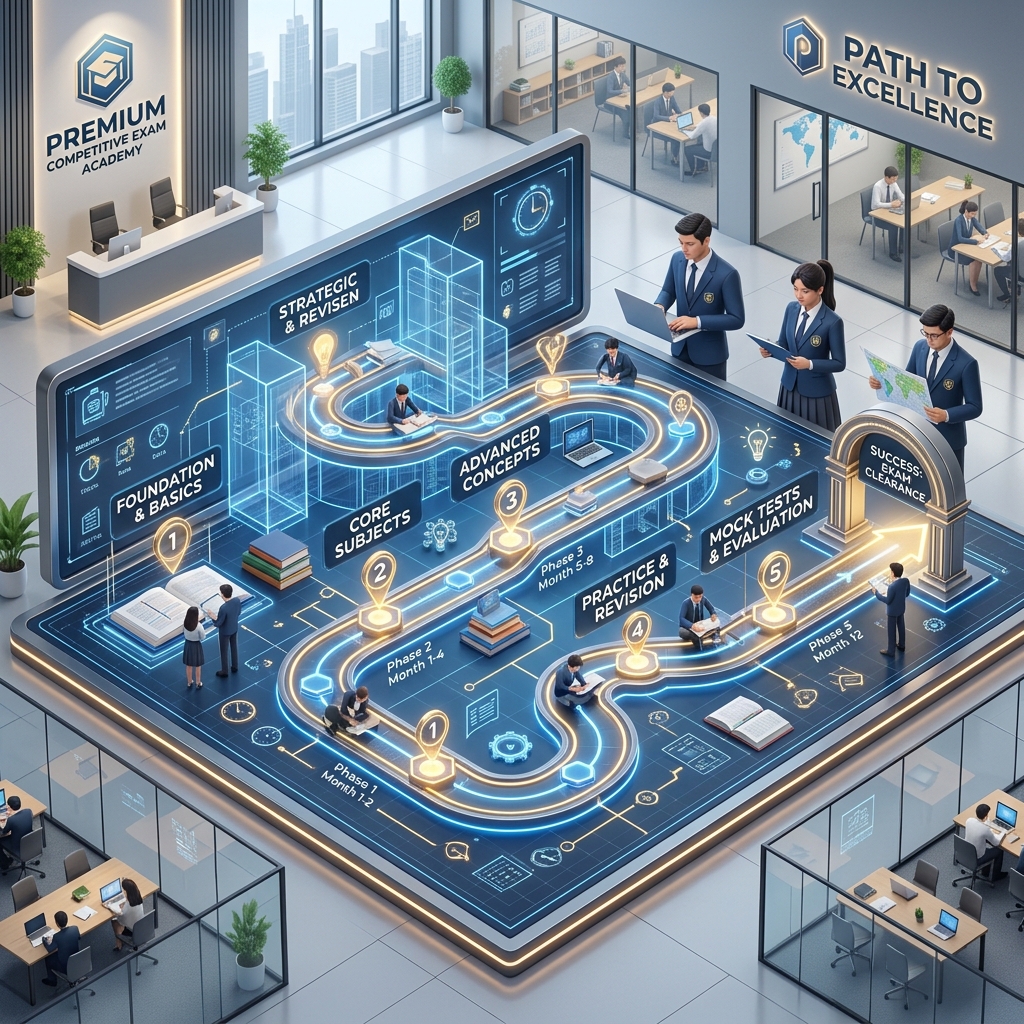
To ensure your students peak at the right time, structure your batches using this proven 6-month roadmap:
Phase 1: Foundation Building (Months 1-2)
Your faculty should focus heavily on core concepts and NCERT mastery. During this phase, ensure your institute's learning management system (LMS) provides students with easy access to recorded lectures and foundation-level quizzes.
- Objective: Clear basic concepts and formula memorization.
- Testing Strategy: Weekly chapter-wise tests.
Phase 2: Advanced Application (Months 3-4)
Transition from NCERT to advanced reference materials. Your lectures should now focus on complex problem-solving and multi-concept applications.
- Objective: Speed building and advanced problem solving.
- Testing Strategy: Fortnightly part-syllabus mock tests covering accumulated chapters.
Phase 3: Exam Simulation & Analytics (Months 5-6)
This is the most critical phase for your institute. Your students should be taking at least 30 to 50 full-length mock tests.
- Objective: Exam temperament, time management, and identifying weak spots.
- Testing Strategy: Bi-weekly full-syllabus tests.
High-Weightage Topics to Prioritize in Your Lectures
Direct your faculty to allocate more teaching hours and doubt-clearing sessions to these high-yield topics based on historical data:
Physics
- Mechanics (Approx. 35% weightage)
- Electrodynamics (Approx. 25% weightage)
- Modern Physics (Approx. 15% weightage - high ROI)
Chemistry
- Organic Chemistry (Approx. 30% weightage)
- Physical Chemistry (Approx. 30% weightage)
- Inorganic Chemistry (Approx. 40% weightage - highly NCERT dependent)
Mathematics
- Calculus (Approx. 35% weightage)
- Algebra (Approx. 25% weightage)
- Coordinate Geometry (Approx. 20% weightage)
Leveraging Technology for Success: The acadmi Advantage
Relying on printed test papers and manual OMR checking is an outdated approach that wastes your faculty's valuable time. To truly prepare your students for JEE Main 2026, your institute needs a robust digital infrastructure.
By transitioning your test prep to acadmi, your institute gains:
- NTA-Style Test Engine: Provide students with a CBT (Computer Based Test) experience that looks and feels exactly like the real JEE Main exam.
- Deep Analytics: Get instant, AI-driven insights into batch performance. Instantly know if your entire batch is struggling with "Electrodynamics" so your teachers can schedule a remedial class.
- White-Labeled Experience: Deliver all these premium features under your own institute's brand name and domain, elevating your market positioning against competitors like Classplus or Google Classroom.
Frequently Asked Questions (FAQs)
How many mock tests should our institute conduct for JEE Main aspirants?
For optimal preparation, institutes should aim to conduct at least 30 to 50 full-length mock tests in the final two months leading up to the exam. Using an automated assessment engine like acadmi makes deploying and grading these tests effortless.
Is NCERT sufficient for JEE Main preparation?
NCERT is fundamental, especially for Chemistry (particularly Inorganic) and Physics theory. However, for Mathematics and numerical application in Physics, your institute must provide supplemental study materials and advanced question banks.
How can our coaching center replicate the NTA computer-based test (CBT) environment?
The best way is to use a specialized Learning Management System (LMS) designed for competitive exams. Platforms like acadmi offer template-based assessment engines that perfectly simulate the NTA interface, helping students overcome digital exam anxiety.
How do analytics help coaching institutes improve student results?
Analytics automatically identify individual and batch-wide weak areas, such as poor time management or specific conceptual gaps. This allows your educators to move away from generic teaching and deliver highly targeted remedial sessions that directly improve scores.